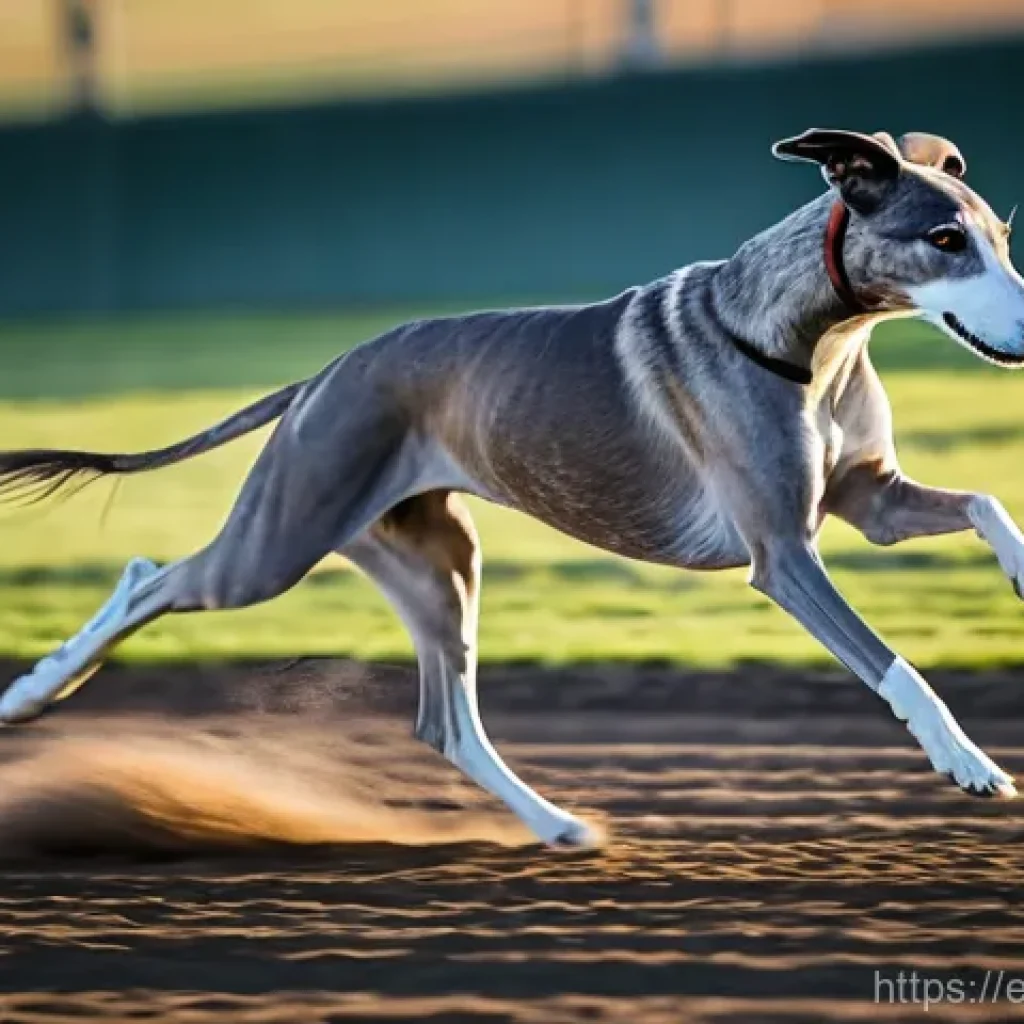
Have you ever watched a Greyhound in full stride and just been completely mesmerized? I know I have! There’s something truly breathtaking about witnessing these incredible athletes unleash their raw power, transforming into a blur of speed right before your eyes.
It makes you wonder, doesn’t it, what exactly gives them that phenomenal ability to rocket across the ground so effortlessly? They’re not just fast; they’re canine rockets, hitting speeds up to 45 miles per hour faster than most cars are allowed to go in a school zone!
My own experience tells me that it’s more than just long legs; it’s a symphony of perfectly evolved anatomy and an innate drive to run. We’re talking about a marvel of nature, from their flexible spines to their powerful muscles, all working in harmony to create the fastest dog on the planet.
Let’s dive in and really unpack what makes Greyhounds such incredible sprinters.
The Aerodynamic Marvel: Built for Speed
Sleek Design, Minimal Drag
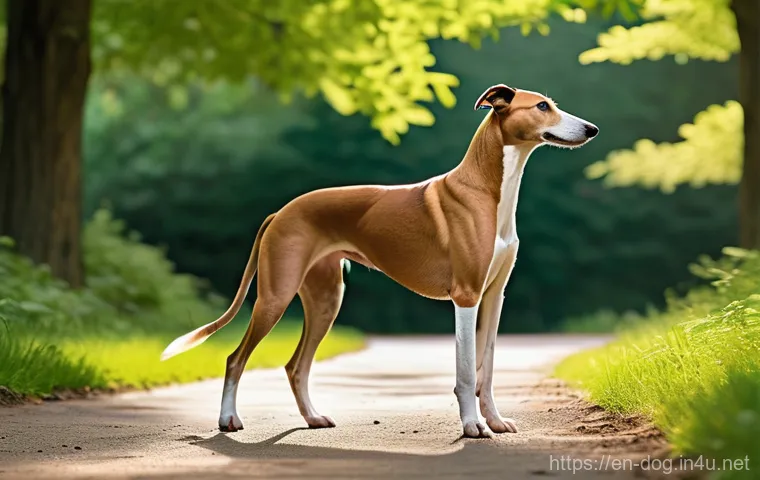
My own eyes have often been drawn to the sheer elegance of a Greyhound’s silhouette. It’s not just pretty; it’s profoundly functional. Their bodies are masterpieces of aerodynamic design, perfectly crafted to slice through the air with minimal resistance.
I mean, seriously, look at that lean frame, the narrow head, and that famously deep chest! It’s like they were sculpted by the wind itself. Every curve and angle seems to contribute to their incredible ability to just glide.
You won’t see any bulky features here slowing them down; it’s all about efficiency. I’ve noticed how their streamlined shape reduces drag, letting them conserve energy and maintain those blistering speeds.
They almost disappear in a blur when they really get going, and that’s thanks in no small part to their incredibly low body fat percentage – typically around 16%, which is about half that of many other breeds!
It makes them light and incredibly agile, allowing them to truly become one with the air as they rocket across the ground.
The Short Coat and Thin Skin Advantage
And it’s not just their overall shape; even their coat contributes! Greyhounds have this super short, smooth fur. I remember thinking how easy it must be to groom, but there’s a real purpose behind it.
This sleek coat, combined with their surprisingly thin skin, does a fantastic job of reducing wind resistance, allowing for even smoother movement through the air.
But wait, there’s more! This thin skin also plays a crucial role in regulating their body temperature. When they’re pushing themselves to the limit, generating a lot of heat, that thin skin helps dissipate it efficiently.
It’s like their own built-in cooling system, letting them run harder and longer without overheating. I’ve seen my own Grey get quite warm after a good zoomie session, and you can practically feel the heat radiating off that thin coat, which is a testament to how well it works!
This natural adaptation is something I truly appreciate, especially during warmer months.
Unlocking the Powerhouse: Muscles and Motors
Fast-Twitch Dominance for Explosive Power
If you’ve ever watched a Greyhound spring into action, you’ll know it’s not just speed, it’s *explosive* power. My experience tells me this isn’t just random; it’s deeply rooted in their biology.
Greyhounds possess a truly unique muscle composition, heavily dominated by what scientists call fast-twitch muscle fibers, particularly Type IIa. Think of these as the ‘turbo boost’ muscles – they contract incredibly quickly and generate immense force for those lightning-fast movements and rapid acceleration.
Other breeds might have a more balanced mix, but Greyhounds are sprinters through and through, designed for bursts of incredible velocity. It’s truly fascinating to see how their hind leg and back muscles are specifically developed to propel them forward with such force.
I remember watching a video in slow motion once, and you could literally see the ripples of power moving through their lean physique – it was breathtaking!
Optimized Muscle Mass and Energy Stores
Beyond just the type of fibers, Greyhounds also boast a higher volume of hip extensor muscles and a larger relative muscle mass in their pelvic limbs compared to many other dogs.
This isn’t just about looking muscular; it’s about pure, unadulterated power output and the ability to accelerate rapidly. What’s also interesting is how these muscles are designed to store nutrients for immediate energy use during those intense sprints.
It’s like having an instant fuel tank ready to go. When my Grey gets the zoomies, it’s not a gradual build-up; it’s an immediate explosion of energy, and that’s the fast-twitch fibers doing their job, fueled by those readily available energy stores.
They’re not built for marathons, but for pure, unadulterated speed over short distances, and their muscles are the core of that ability.
The Heartbeat of a Champion: Cardiovascular Prowess
An Oversized Engine for Peak Performance
The engine behind a Greyhound’s incredible speed and stamina isn’t just their muscles, but an extraordinary cardiovascular system. And let me tell you, their heart is truly a champion’s heart.
Proportionally, a Greyhound’s heart is much larger than that of other breeds of similar size. This isn’t just a fun fact; it’s a critical adaptation. A larger heart means it can pump more blood with each beat, ensuring that their powerful muscles receive a rapid and continuous supply of oxygen and vital nutrients during intense exertion.
My vet once explained to me how crucial this is for sustaining their rapid pace and for efficient blood circulation. When you see how quickly they can recover after a full-out sprint, you realize just how effective this super-sized pump truly is.
Superior Lung Capacity and Oxygen Delivery
Complementing their robust heart, Greyhounds also possess an amazing lung capacity, thanks to their deep chest cavity. I’ve always been amazed by how deep their chests are, and it makes perfect sense now.
This extra space allows for larger lungs, which means they can take in significantly more oxygen with each breath. During a sprint, their respiratory system works incredibly efficiently, oxygenating their blood quickly and ensuring their muscles are constantly supplied with the oxygen-rich blood they need to generate maximum power and delay fatigue.
Plus, their blood actually contains more red blood cells, further enhancing that critical oxygen delivery. It’s a complete system, working in perfect harmony, that allows them to achieve and maintain those astonishing speeds.
Skeletal Secrets: The Flexible Framework
Long Limbs and a Spring-Loaded Spine
It’s easy to focus on muscles and hearts, but the Greyhound’s skeleton is just as vital to their speed. My personal observation is that their long, slender legs seem almost disproportionate until you see them run.
Those lengthy limbs are crucial for allowing a wide stride, meaning they cover more ground with each powerful step. But the real secret sauce, in my opinion, lies in their incredibly flexible backbone.
This isn’t a rigid structure; it’s like a spring, allowing them to stretch out and contract their bodies to the absolute maximum during a gallop. This unique flexibility essentially amplifies their stride length, turning their entire body into a powerful lever that propels them forward.
It truly is a marvel of evolutionary engineering, and a core reason why they move with such fluidity.
The Double Suspension Gallop: Airborne Prowess
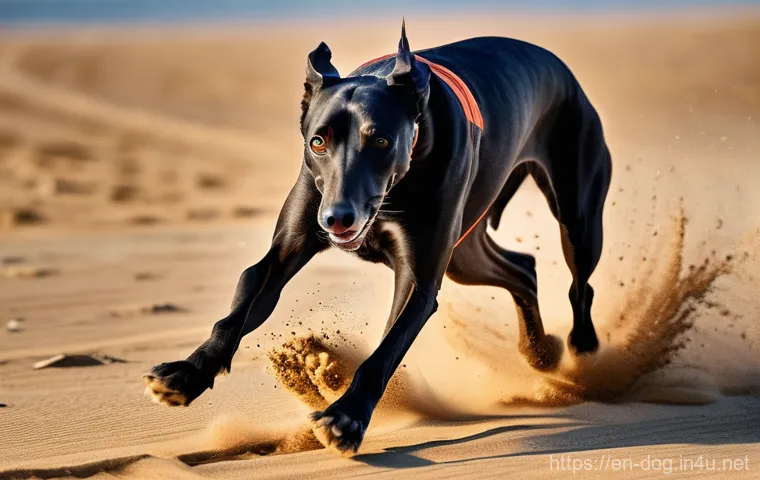
When you combine those long legs and flexible spine, you get one of the most mesmerizing running styles in the animal kingdom: the double suspension gallop.
I remember first seeing a slow-motion video of this, and it blew my mind! In this unique gait, there are actually *two* points during each stride where all four of the Greyhound’s feet are completely off the ground – once when they are fully extended, and again when they are tucked beneath their body.
Most other dogs only have one such airborne phase. This isn’t just for show; it allows them to cover an astonishing amount of ground with each bound, effectively making them airborne rockets for a significant portion of their sprint.
It’s this biomechanical marvel that gives them such incredible reach and speed, truly showcasing how every part of their body is optimized for peak performance.
Footwork Fundamentals: Paws on the Pavement
The Hare-Like Foot for Traction and Power
You might not think about a dog’s feet much, but for a Greyhound, they’re absolutely essential. My experience with my own Grey has taught me how delicate yet powerful their paws can be.
Greyhounds have what’s often called a “hare-like” foot structure. This isn’t just a cute name; it describes a foot designed for maximum efficiency. Their unique foot structure provides incredible traction, stability, and crucial shock absorption during those high-speed movements.
I’ve watched them dig in on turns, and those feet are doing some serious work! What’s more, they have a hinged ankle, which allows for a greater range of motion and helps extend their already impressive stride length.
Their arched toes also play a role, providing extra propulsion with each push-off. It’s truly a testament to how specialized every part of their anatomy is.
Protecting Those Precious Pads
While their paws are built for speed, I’ve learned firsthand that their paw pads can also be quite sensitive. After a vigorous run, especially on rough or hot surfaces, it’s really important to check them.
I’ve had friends whose Greyhounds have experienced torn or blistered pads from hard running. It’s a reminder that even the fastest athletes need protection!
Things like paw waxes or even special booties can make a huge difference, particularly if you’re running on abrasive ground or in extreme temperatures.
It’s a small detail, but ensuring their feet are healthy is vital for keeping them happy and sprinting safely. After all, those paws are their primary interface with the ground, and we want to keep them in tip-top shape.
Beyond Biology: The Role of Genetics and Training
A Legacy of Speed: Centuries of Selective Breeding
While all these amazing physiological traits sound like pure magic, there’s a very real science behind them: generations of selective breeding. My own understanding deepened when I realized Greyhounds aren’t just naturally gifted; they are a living legacy of meticulous breeding for speed.
For centuries, humans have carefully chosen and bred Greyhounds specifically for their racing abilities, refining their genetic blueprint to prioritize rapid acceleration and sustained velocity.
This means that the incredible anatomical features we’ve discussed—the big heart, the flexible spine, the fast-twitch muscles—have been honed and passed down through countless generations.
It’s not an accident; it’s a purposeful design, proving that while nature provides the raw materials, thoughtful breeding can create true masterpieces of athleticism.
Fueling the Fire and Mastering the Sprint
Of course, even with perfect genetics, a Greyhound needs the right care to reach their peak. This is where diet and training come into play, something I’ve seen make a huge difference in an animal’s performance and overall well-being.
Greyhounds have a high metabolic rate, meaning they need a diet rich in protein for muscle growth and recovery, along with complex carbohydrates for sustained energy during those intense bursts of speed.
It’s like a finely tuned sports car needing premium fuel! Moreover, proper training isn’t just about making them run; it involves strategic conditioning.
Regular, controlled exercise and even interval training can significantly enhance their speed and stamina, while also reducing the risk of injury. And let’s not forget recovery!
Greyhounds have an impressive ability to process lactic acid efficiently, which quickens their recovery time after an intense sprint. My own dog, despite being retired, still benefits from a balanced diet and regular, joyful runs, keeping that incredible physiology finely tuned.
| Feature | Adaptation for Speed | Comparative Advantage |
|---|---|---|
| Body Shape | Slim, aerodynamic build; low body fat; narrow head | Minimizes air resistance, increases fluidity of motion |
| Heart Size | Larger relative to body size | More efficient blood pumping, superior oxygen delivery to muscles |
| Lung Capacity | Deep chest housing large lungs | Higher oxygen intake, quicker blood oxygenation, delays fatigue |
| Muscle Fibers | High proportion of fast-twitch (Type IIa) fibers | Explosive power, rapid acceleration, quick, powerful movements |
| Spine Flexibility | Highly flexible backbone | Maximizes stride length through stretching and contracting |
| Foot Structure | “Hare-like” feet with hinged ankles and arched toes | Superior traction, propulsion, and extended range of motion |
Closing Thoughts
And there you have it, folks! It’s truly incredible, isn’t it? Every aspect of the Greyhound, from their aerodynamic silhouette to their powerhouse heart and flexible spine, screams speed. Having spent time observing and loving these magnificent creatures, I can personally attest to the sheer wonder of their design. It’s not just about winning races; it’s about a breathtaking harmony of biology and evolution that allows them to perform feats of athleticism that leave you utterly spellbound. They are living works of art, built for exhilaration and grace.
Useful Information to Know
1. Greyhounds thrive on short, intense bursts of exercise rather than long, endurance runs. A good 20-30 minute sprint session in a secure, fenced area is often more beneficial than an hour-long jog, especially for retired racers.
2. Due to their low body fat and thin skin, Greyhounds are more sensitive to extreme temperatures. They might need a coat in winter and prefer air-conditioned comfort in scorching summers. Always be mindful of their delicate frame!
3. Their unique blood composition, with a higher red blood cell count, is an advantage for oxygen delivery but can sometimes lead to misinterpretations in standard veterinary blood tests. Always let your vet know you have a Greyhound!
4. Many Greyhounds are retired from racing and make wonderful, gentle pets. They adapt surprisingly well to indoor living and are often referred to as “45-mph couch potatoes.” Consider adopting one – it’s a truly rewarding experience.
5. Dental care is particularly important for Greyhounds, as they can be prone to dental issues. Regular check-ups and cleanings, along with at-home dental hygiene, will keep those pearly whites healthy and bright.
Key Takeaways
Ultimately, a Greyhound’s unparalleled speed is the result of a perfectly integrated system: an aerodynamic body for minimal drag, a powerful, oversized heart and lungs for superior oxygen delivery, fast-twitch muscle dominance for explosive power, a highly flexible spine for extended stride, and specialized “hare-like” feet for traction and propulsion. This combination, refined through centuries of selective breeding, culminates in an athlete that is truly a marvel of the natural world. It’s a testament to how every biological detail can converge to create a creature of extraordinary capability, and it’s why they capture our hearts with every lightning-fast sprint.
Frequently Asked Questions (FAQ) 📖
Q: What exactly makes Greyhounds such incredible sprinters?
A: Oh, this is a question I absolutely love to answer! When you see a Greyhound running, it’s like watching a perfectly engineered machine. From my own observations, it’s a beautiful combination of several unique physical traits.
First off, their spine is incredibly flexible. This allows them to perform what’s called a “double suspension gallop,” where all four feet are off the ground twice during each stride – once when they’re fully extended and once when they’re tucked under.
It’s this incredible elasticity that gives them such an enormous reach and power. Then there are those powerful hind legs, practically coiled springs ready to unleash explosive force.
Their deep chest means they have huge lung capacity, so they can take in a massive amount of oxygen with each breath, fueling those powerful muscles. And let’s not forget their sleek, aerodynamic build and a long, strong tail that acts like a rudder, helping them balance and steer at top speeds.
Truly, it’s a marvel of evolution!
Q: Just how fast can a Greyhound actually run, and how does that compare to other animals?
A: This is where it gets really exciting! Greyhounds are renowned for their incredible speed, and for good reason. They can hit top speeds of around 45 miles per hour (that’s about 72 kilometers per hour!).
When you think about it, that’s faster than most cars are allowed to go in residential areas, and they get there from a standing start in a blink! Of course, they’re not quite as fast as a cheetah, which can reach nearly 70 mph, but the cheetah is a wild cat built for very short bursts.
Compared to other animals, Greyhounds are astonishingly quick. For instance, a racehorse might average around 35-40 mph in a sprint. So, while a cheetah might win a 100-yard dash against a Greyhound, over a slightly longer distance, Greyhounds are still champions of speed in the dog world.
My experience watching them accelerate is something else; it’s like they’re shot out of a cannon!
Q: Are there any other dog breeds that can keep up with or even outrun a Greyhound?
A: That’s a fantastic question and one that often sparks a lively debate among dog enthusiasts! While the Greyhound is widely recognized as the fastest dog breed, and certainly the fastest over typical racing distances, there are other sighthounds that come pretty close and are incredibly fast in their own right.
Breeds like the Saluki, for example, are known for their incredible endurance and speed, sometimes reaching speeds comparable to a Greyhound over longer distances, though perhaps not quite matching the Greyhound’s initial explosive acceleration.
Other fast sighthounds include the Afghan Hound and the Borzoi, both bred for chasing prey. However, when it comes to pure, unadulterated straight-line sprinting speed over shorter to medium distances, the Greyhound truly stands alone at the top of the canine speed charts.
I’ve personally seen various sighthounds run, and while they are all beautiful and swift, there’s just something about a Greyhound’s sheer effortless power that sets them apart.